Peter McDonald is my maternal grandfather’s grandfather.
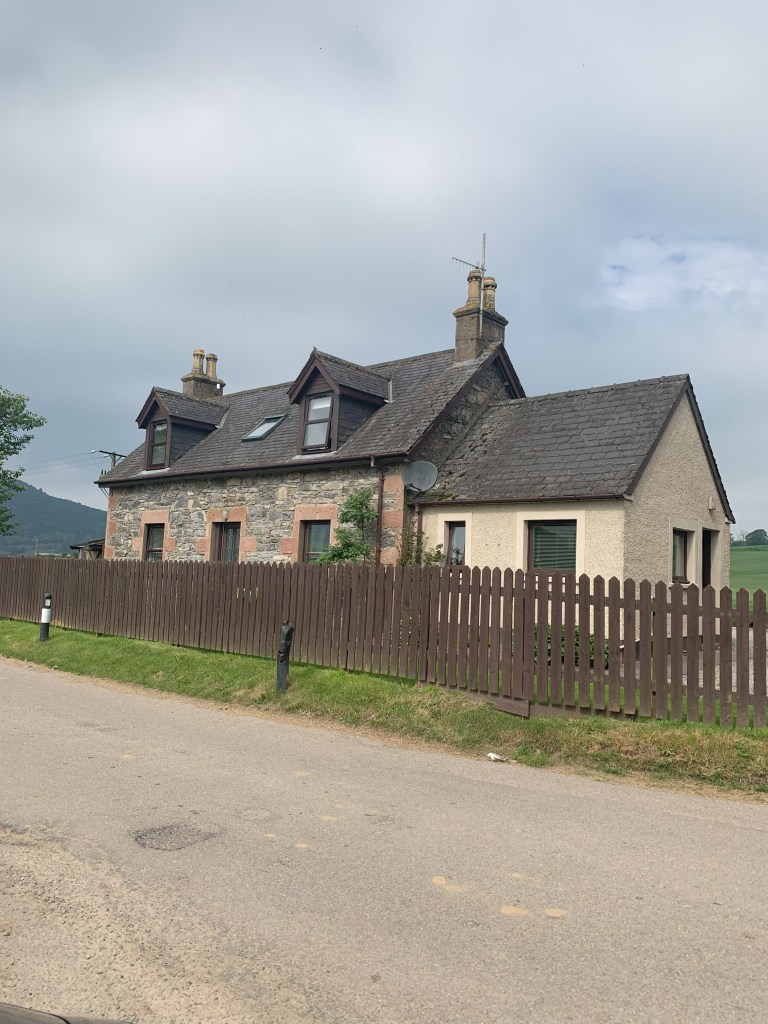
Peter was born on 17th February 1830 at Kinnahaird Farm, a livestock and arable farm in Contin, Strathpeffer, near Inverness, in Scotland. His parents were John McDonald and Barbara McDonald. Yes, his parents were both called McDonald although they were probably not related. It’s a common name in Strathpeffer. They had married in January 1829 at Kinnahaird, where they both worked. John and Barbara had four children between 1830 and 1835, Peter, Roderick, Mary and, Ann.
John married a Mary Matheson in 1839, which suggests that Barbara may have died, although I can find no record of her death. I can only assume she died sometime between 1836, when Ann was born, and 1839. John and Mary Matheson had five children, Catherine, Margaret, John, Thomas and George, born between 1840 and 1850.
When the first UK census was taken in June 1841, Peter, aged 11 was working as a servant at Allanfearn in the Heights of Achterneed. Allanfearn, which may have been a collection of crofts, lists eight households. Peter is in a household with George Matheson, a farmer aged 60, Catherine Matheson aged 58 and Margaret Matheson aged 24. Eleven year-old Peter was listed as a male servant. Although no family relationships were listed, a later census places George Matheson with his wife Catherine and their daughter, Margaret, and two grandchildren, Catherine and Margaret McDonald, suggesting that George and Catherine were the parents of John’s second wife Mary Matheson.
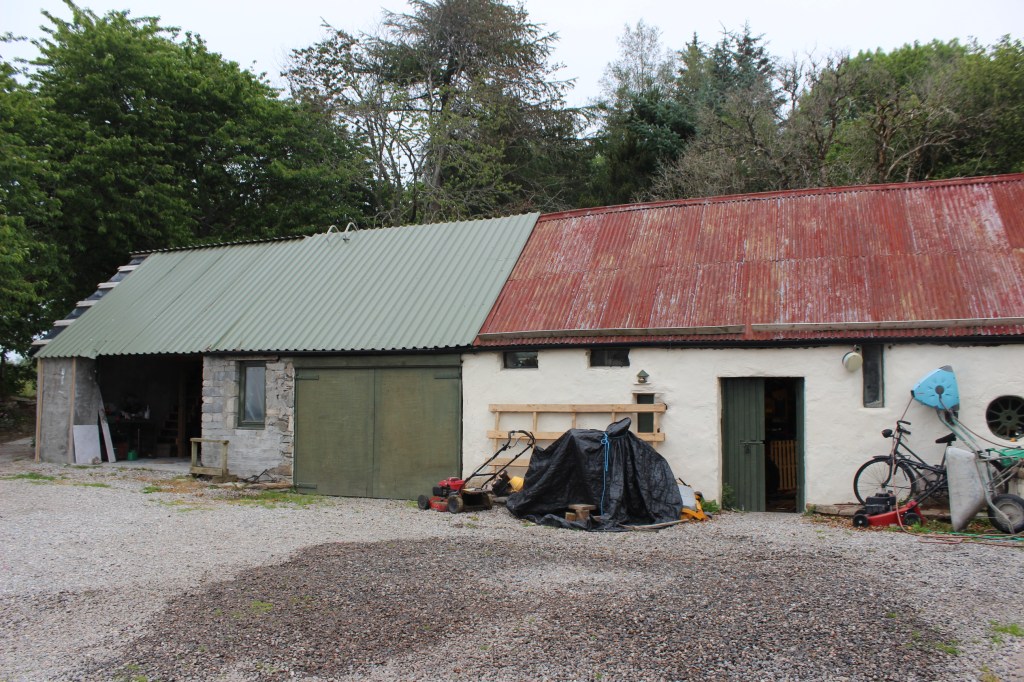
In March 1851, aged 21, Peter was living at Conon Village not far from Strathpeffer in the parish of Urquhart and Logie Wester. He was working as a journeyman smith for a blacksmith, George Gair and was living with George, George’s family, a servant and an apprentice smith. A journeyman is a skilled worker who has completed an apprenticeship and is authorised to work as a qualified employee but not yet to be self-employed. They were usually paid by the day.
Sometime after this, Peter travelled to New Zealand where he settled in Auckland but I’ve not been able to find a record of his journey. In August 1855 he was registered on the Electoral Roll for Auckland, at Wyndham St, which appears to be the forge where he was working as a blacksmith.
On 23 March 1857 he registered his ‘Intention to Marry’ Dorcas Walters, eldest daughter of Vincent Walters and Ann Sanday. Dorcas was born in Cornwall, and the Walters had been in Auckland since December 1848. The Walters family lived in Waiuku, however Vincent had property interests in Lorne St in Auckland city and I wondered if Peter had smithied for him. Peter and Dorcas married on the 26th March at the Wesleyan Chapel off High St. The Walters were leaders within a committed Wesleyan community and Peter appears to have had no strong religious affiliations.Peter and Dorcas’ son John, Grandpa’s father, was born on 21st June 1858.
On 26 August 1860 Peter wrote a letter to his brother Roderick in Scotland, boasting about his splendid son John and complaining about life in Auckland. He reports that John is “as fine a son as ever I did see anywhere” and suggests that at two years John talks more like a four year old. He says that affairs are “in a fearful state” in Auckland and that Māori/ settler relationships are not good. He has joined the militia, however his activity seems to be solely drill rather than active service. In a Herald article of 6th March 1917, it was suggested that Peter “saw active service in the Maori war, where, whilst serving under Colonel Nixon in the Waikato Mounted Constabulary he was severely wounded”. Peter was not listed on the roll for the Mounted Constabulary, formally known as the Colonial Defence Force (cavalry). The Auckland militia was a local volunteer force led by General Pratt. He suggests that the cost of living is high and that most settlers would leave as soon as they could. He asks after his sisters, Ann and Mary as well as his five half siblings. And he passes on his best wishes to the people at Allanfearn. Charmingly, he addressed the letter to Dear brother and signed it Your loving brother, P McDonald.
On 19th April 1861 Dorcas died from intestinal ulcers and is buried in the Grafton cemetery. On 27th April 1864 Peter married an Irishwoman, Margaret Collins at the Cathedral of St Patrick’s and St Joseph’s, on Federal St. Peter and Margaret had three children in Auckland, Henry, Helena and Roderick. Peter now describes himself as an engineer so perhaps his business was growing or perhaps, he was just talking himself up. Maybe he was still disappointed with the high cost of living in Auckland or perhaps he had a connection in Australia. Whatever the reason, sometime around 1870 Peter and Margaret with the four children moved to Australia. John would have been around twelve. The family lived in Eden near Bega. Between 1871 and 1883 Peter and Margaret had seven more children, Matilda, Daniel, Alfred, Margaret, Annie, George and Amelia. Matilda and Alfred died as infants.
Peter continued to work as a blacksmith/engineer in Australia, however life wasn’t living up to his expectations and in 1874 he was declared insolvent. He appeared before the Supreme Court of NSW in relation to insolvency a number of times between 1874 and 1882. I can find no further mention of him after his final appearance in 1882. According to his descendants in Australia, he disappeared while travelling to Melbourne to patent an invention.
By the time Peter and Margaret’s youngest child, Amelia was born, Peter’s first son, John, was 23, married to Charlotte Latimer and had three children. They lived in Bega and in 1897 they moved their family, now six children, to Waiuku in New Zealand. But that is another story which I will tell later.
I first heard of Peter McDonald when I was about ten years old. My Grandpa, Harold McDonald, the youngest son of John and Charlotte, kept a hoard of interesting things, in a cupboard in the kitchen. One Sunday when I was visiting with my family, Grandpa went to the cupboard and retrieved a very old letter he said was written by his grandfather. Thus began a lifelong fascination with “the letter”
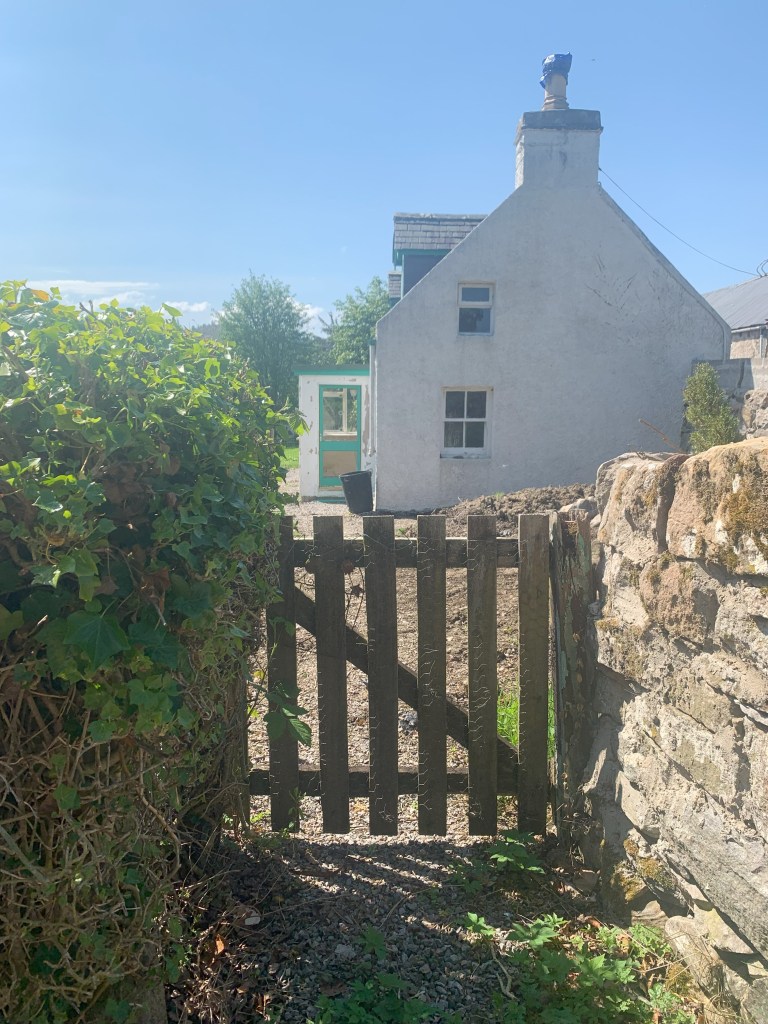
Grandpa and his three older brothers had fought in WWI. One of those brothers, Ronald, was injured and convalesced at the Sling Camp in Wiltshire. At the end of this convalescence, Ronnie travelled to Strathpeffer in Scotland and stayed at Cypress Cottage in the Heights of Achterneed with Mary and Donald McDonald, Roderick’s (Peter’s brother’s), son and daughter. They gave Ronnie “the letter” which Roderick must have saved. This raises an interesting question. This was not the first letter Peter wrote to Roderick and probably not the last. I wonder why he saved this one. I also wonder how he knew where the family lived and can only assume there had been ongoing communication. When Ronnie returned to New Zealand in 1918, he gave the letter to his father. John gave it to Harold, who passed it to his son (my uncle) Lindsay. Uncle Lindsay gave me the letter and in order to ensure that it is professionally preserved and accessible to all family, I deposited it at the Historic Manuscripts Collection at Auckland public library. I have spent the best part of fifty years untangling the story of Peter McDonald.
Peter, Phoebe and I stayed in the Heights of Achterneed in 2018 and we visited Allanfearn. We also located Cypress Cottage however the woman of the house wasn’t especially welcoming. Her name was McDonald, no relation and she told us that people from New Zealand are always coming to ask about the other McDonalds who used to live there. I suspect she was the daughter who answered the door when Uncle Ronnie’s son visited in 1995. We visited again in 2024, staying in Achterneed, and visited Arthur and Margaret Scott. Arthur had written a book about Strathpeffer and included the story of Peter and “the letter” This time we were able to locate the grave of Roderick and his family in Fodderty cemetery.
Recently Uncle Ronnie’s granddaughter, Wendy Macdonald, gifted me Peter’s family bible, which is inscribed with his name (PMcDonald) and the date, June 1st, 1860. It is a much treasured addition to the mysterious story of the elusive Peter McDonald.
Other stuff you might find interesting:
Remembering the Strathpeffer area; the Heights
Echoes of the Glen, Highland Journey, Croft and Ceilidh by Colin Macdonald
Strathpeffer 1770-1900: from a valley of farms to a village of villas by Arthur G Scott
The Strath: a biography of Strathpeffer by Clarence Findlayson

